
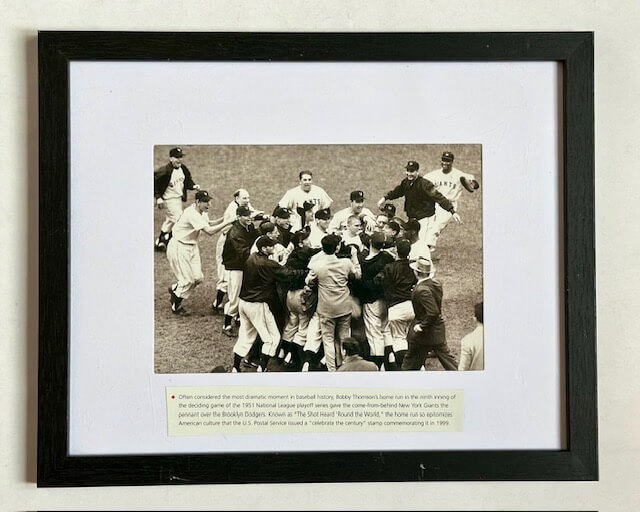
In the long, winding history of baseball, few moments have carried the shock, electricity, and cultural weight of Bobby Thomson’s swing on October 3, 1951. The Giants and Dodgers had battled through an unforgettable season, a rivalry already steeped in borough pride and decades of tension, but nothing prepared the baseball world for the drama that unfolded that afternoon at the Polo Grounds. The Giants were down, the crowd restless, and the Dodgers just three outs away from securing the pennant. Then came the pitch from Ralph Branca — a fastball that would become one of the most replayed deliveries in sports history. Thomson turned on it with a compact, explosive swing, sending the ball soaring into the left‑field stands as the stadium erupted in a roar that felt like it shook the entire city. Broadcasters lost their voices, fans leapt over railings, and newspapers scrambled for headlines big enough to capture the shock of the comeback. What made the moment immortal wasn’t just the home run itself, but the way it crystallized everything New York baseball represented at the time: rivalry, heartbreak, redemption, and the belief that anything could happen in the final breath of a game. More than seven decades later, the memory of that swing still echoes — a reminder of the day baseball delivered a miracle that truly felt like it was heard around the world.
What often gets overlooked in the retelling of Thomson’s home run is the sheer magnitude of the moment beyond the field itself. New York in the early 1950s was a city divided by baseball loyalties — Giants fans packed the Polo Grounds, Dodgers fans filled Ebbets Field, and the rivalry spilled into neighborhoods, workplaces, and family dinner tables. The 1951 season had already been a roller coaster, with the Giants clawing back from a massive mid‑season deficit to force the playoff series. By the time Thomson stepped into the batter’s box, the entire city felt suspended in a kind of collective breath. When the ball cleared the wall, it wasn’t just a victory; it was a shockwave that rippled through boroughs, radios, and headlines. The moment became a symbol of possibility — the idea that a season, a rivalry, even a city’s mood could flip in an instant. Decades later, the home run still resonates not just because of the score it changed, but because of the way it captured the drama, unpredictability, and mythology that make baseball feel larger than life.
As the decades have passed, the legend of Thomson’s swing has only grown, carried forward by grainy radio calls, black‑and‑white photographs, and the memories of fans who witnessed the moment that shook the baseball world. It remains one of those rare events where history, rivalry, and emotion collided in a single instant — the kind of moment that still inspires collectors, storytellers, and anyone who loves the mythology of New York baseball. For those who appreciate preserving the history of that unforgettable day, the Bobby Thomson “Shot Heard ’Round the World” Framed Photo – 1951 NL Pennant offers a timeless way to honor the swing that changed everything.