
 All-star contributor
Some men are born with names that feel too small for the lives they end up living. Daniel Joseph Staub was one of them. Long before ballparks chorused his nickname or Montreal painted his legend in bold strokes of orange, he was just a New Orleans boy with a shock of fiery hair and a borrowed bat that was almost too big for his hands. His father, Ray—once a minor league catcher-placed that bat in Rusty’s palms when he was three. Imagine that: a toddler being taught how to swing at life before he even knew the rules.
Rusty grew up surrounded by faith, family, and the quiet grief of a tragedy that shaped him long before fame ever could. His uncle-a New Orleans policeman-was killed in the line of duty. Rusty remembered the rosary beads slipping through his mother’s fingers as they prayed together in a dimly lit room. It was the kind of memory that stays lodged under the skin, the kind that later inspires a man to become a lifeline for others.
Jesuit High School became Rusty’s proving ground. He wasn’t just good-he was the kid who hit a 400-foot championship-winning homer like it was the most natural thing in the world. By the time the Houston Colt .45s offered him a contract, the city already knew he was made of something rare.
At nineteen, Rusty walked into the Major Leagues still boyish-faced, splitting time between first base and the outfield, trying to prove he belonged. The numbers came slowly at first. The confidence arrived one broken-in glove, one grown-up swing at a time. And then, in 1967, everything clicked-44 doubles, an All-Star nod, and a glimpse of the star he was becoming.
But Rusty’s story really took off the moment he landed in Montreal.
The city didn’t just welcome him-they embraced him as if they had been waiting for him all along. He learned French to speak with the fans. They gave him a new name, “Le Grand Orange,” a title that felt less like a nickname and more like a coronation. He played like a man carrying a city on his shoulders-sharp-eyed at the plate, fearless in right field, steady enough to become the Expos’ first true icon. Years later, Montreal would retire his number, the first they ever retired. Because legends don’t fade; they hang in the rafters.
Then came New York.
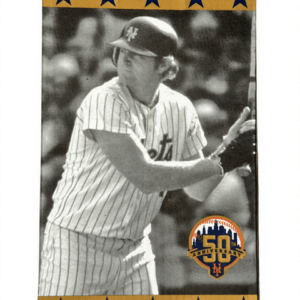
Rusty became a Met with the kind of trade that sparks debate decades later. He started hot-too hot, perhaps, because life has a way of balancing brilliance with hardship.
A pitch fractured his wrist. Another pitch broke bones the next year. Still, Rusty kept hitting, kept delivering, kept showing up even when his body protested. In the 1973 postseason, he battered through the pain, hitting .341 and putting together a run so gutsy, so unforgettable, that Mets fans still talk about it like a miracle. Even injured, he robbed Dan Driessen with a catch that sent him crashing into the outfield wall—an injury that later changed how Major League parks padded those fences. Rusty didn’t just play the game; he helped reshape it.
Detroit came calling next. Then Texas. Then, fittingly, a return to Montreal. But the Mets were the ones who brought him home in the twilight of his career, turning him into the most reliable pinch-hitter in the league. He never reached those 3,000 hits-284 short-but he became the only man in baseball to notch 500 hits with four different teams. There’s a quiet poetry in that kind of wandering excellence.
Off the field, Rusty’s heart worked overtime.
He launched the Rusty Staub Foundation to fight hunger. He created a fund for the widows and children of New York’s fallen police officers and firefighters-an echo of the uncle he once mourned as a boy. After 9/11, his organization raised over $112 million to support the families shattered by that day. Rusty didn’t just play baseball; he played guardian to a city that loved him back.
He launched the Rusty Staub Foundation to fight hunger. He created a fund for the widows and children of New York’s fallen police officers and firefighters-an echo of the uncle he once mourned as a boy. After 9/11, his organization raised over $112 million to support the families shattered by that day. Rusty didn’t just play baseball; he played guardian to a city that loved him back.
His retirements-first from the diamond, then from the Mets broadcast booth-didn’t slow him down. He opened restaurants. He wrote a children’s book. He served as an ambassador for the game he adored, greeting fans with the same warmth he carried throughout his life.
Related Collectible: Rusty Staub
Honor Rusty Staub’s legacy with our Rusty Staub Mets 50th Anniversary Bobblehead — a meaningful piece for Mets fans and collectors who appreciate his impact on the field and in the community.
Honor Rusty Staub’s legacy with our Rusty Staub Mets 50th Anniversary Bobblehead — a meaningful piece for Mets fans and collectors who appreciate his impact on the field and in the community.
Rusty never married. He came close once-with Candice Laflamme, whom he met during his Montreal days-but life took them on different paths. Somehow, though, that felt fitting for a man whose heart always seemed divided between cities, causes, and ballclubs.
In October 2015, on a transatlantic flight, Rusty’s heart stopped. Literally. Two doctors revived him midair. He fought through that scare, just as he had fought through every pitch life had thrown at him.
But on March 29, 2018—Opening Day, no less-Rusty Staub’s story came to its quiet, final inning. Three days shy of his 74th birthday, the world lost a hitter, a hero, a foundation-builder, a friend.
Yet somewhere between the orange hair and the thunder of packed stadiums, Rusty Staub became something more than a baseball player. He became a thread in the fabric of every city he touched. A symbol of heart. A reminder that greatness isn’t only measured in hits or home runs but in the lives one lifts along the way.